

This week’s blog post is printed with permission from Dr. Michael M. Newman, DNM, Ph.D, HHP, FAIS, Doctor of Natural Medicine, Author, Researcher: Neuroscience coach; Stress and Generalized Anxiety Disorder
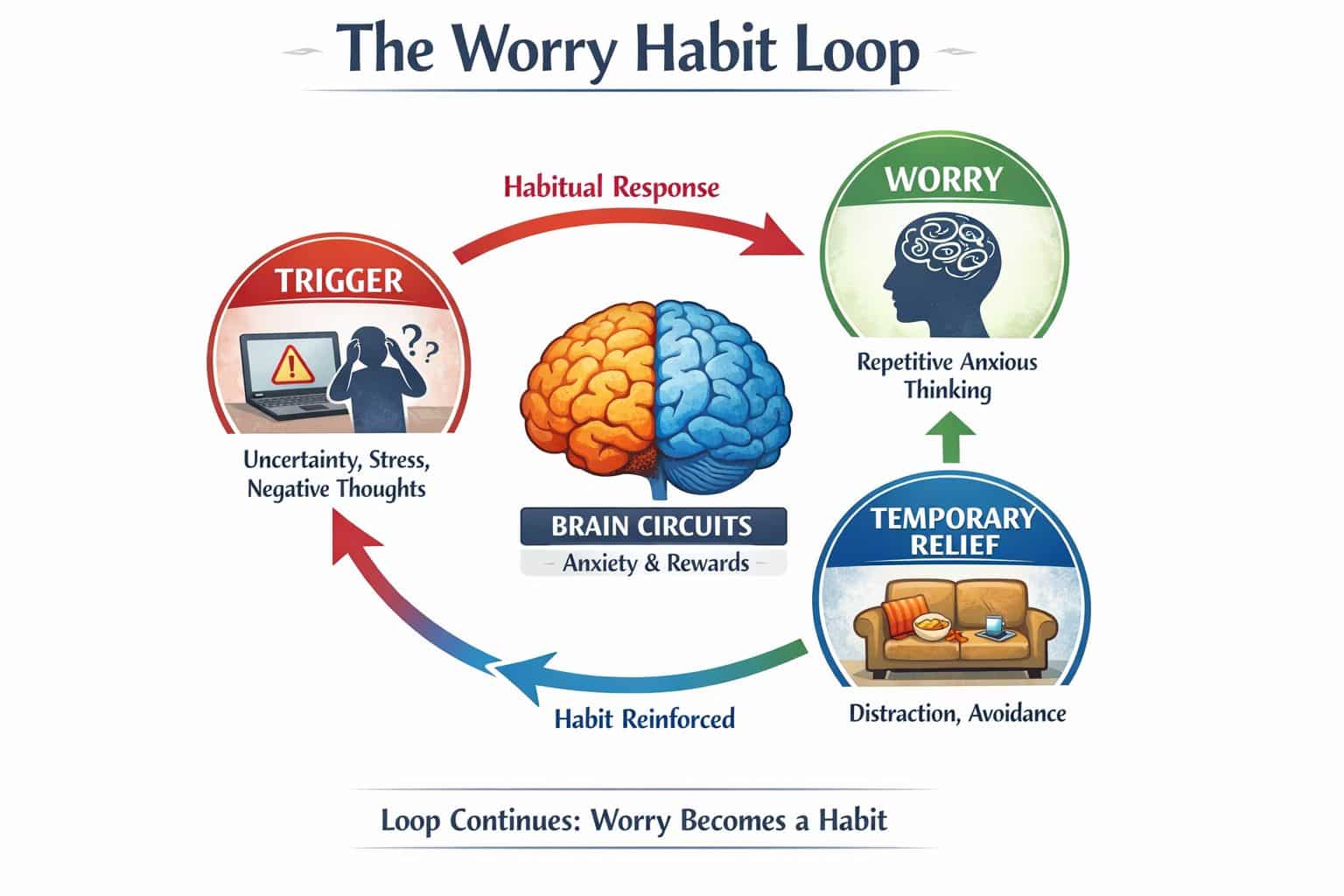
Understanding the Worry Habit Loop
From a neuroscience perspective, worrying is a habit. Our brains often see worry as a way to protect us. Even though worrying feels uncomfortable, it can give us a temporary sense of control when we face potential threats. When we worry, our brains release chemicals that strengthen this response, creating a cycle. This means we learn to link worrying with a false feeling of safety, which drives us to worry more during stressful times. Over time, this cycle can turn into a habit, making it hard to stop worrying, even when there is little or no actual danger.
Recognizing the Worry Habit Loop: Awareness is the First Step
Understanding the worry habit loop is key to breaking the cycle of anxiety. This loop has three main parts: the trigger, the reaction, and the reinforcement. Being aware of what triggers our worries—whether from outside or from within—is crucial. Once we know what makes us worry, we can look at how we react. By identifying our thoughts and actions that keep the worry going, we can take steps to interrupt the cycle. Boosting our awareness helps us handle anxiety better and creates a foundation for healthier coping strategies.
Neural loop (simplified):
– Trigger → uncertainty, stress, body sensations
– Behaviour → repetitive worrying / mental rehearsal
– Short-term reward → feeling prepared, less uncertainty
– Long-term cost → increased anxiety
Key insight: The brain isn’t broken—it’s overprotective.
This protective instinct can often manifest as heightened caution in response to perceived threats, leading to behaviours and reactions that may seem irrational or excessive. Understanding this aspect of brain function helps us recognize that our responses to stress or anxiety are rooted in a fundamental desire for safety and survival, rather than a failure of the mind. This perspective encourages a more compassionate view of our mental processes, acknowledging the brain’s role in safeguarding our well-being.
Dr. Michael N | Brain Health 🧠